Friday, 24 October 2014

Thursday, 23 October 2014
Tuesday, 21 October 2014

Sunday, 19 October 2014
Preliminary Task and Evaluation
For the creation of our preliminary task our class worked together in one group due to the limited numbers in our class, this had its benefits and its issues; while it was significantly easy and more practical to work in a larger group and share out the work fairly, I sometimes struggled as it was significantly more difficult for everyone to hear and be heard, this was made evident during the planning stages of our film when we separated to do the script and the storyboard in two groups but when we rejoined the two were inconsistant and both groups had to compromise and changed some details.
However during the filming stages having a group with larger numbers did prove to be helpful as we had another members for acting, filming, sound, direction and handy jobs like untangling wire or assisting with filming. I found it difficult for everyone to work together during the process as everyone had quite different ideas and aims for filming, several of the shots were improvised to compromise between the storyboard and the script, however it was easier and quicker to film the necessary shots, as it would take longer if we filmed in smaller groups it would take significantly longer.
We did face some contingency issues, as we suffered from timing issues as we filmed the film across several lessons on different days, meaning the actors clothes were different and we had to change the location we filmed in. We also did a pan of the empty classroom, where there is no one under the desk and then cuts to a different classroom with someone under the desk. If we were to redo the film, this is an issue I would want to improve upon.
Despite some technical issues we did manage to film some decent shots and through the editing system they managed to combine almost seamlessly to create a flowing movement as Jo walks through the school.
I enjoyed the editing section of this task, as it was interesting learning and becoming accustomed to a new, more professional software, especially as we will be using it for the main editing of of film opening
Wednesday, 15 October 2014
Preliminary Task Planning
Storyboard

1. Establishing Shot of of Knights Templar School
2. Pan/wide shot of the corridors in K block
3. Long shot of female walking up the corridor from behind to build tension and mystery
4. Mid Shot of Joanna, scream heard.
5,6,7. Shot, reaction, shot. Shot of door where the scream is heard, then cut to Joanna's reaction and then back to the door.
8. Slow zoom in on door as Joanna walks towards it.
9. Extreme close up on door handle.
10.Long angle shot from the inside of the room as Joanna opened the door.
11. Pan of classroom.
12, 13, 14. Joanna walks around the desk followed by camera.
15. Extreme Closeup of Joanna's hands untying Jemma
16. Mid shot of Jemma as she talks to Joanna.
17. Mid shot of Joanna as she talks to Jemma.
18. Mid shot of Jemma as she talks to Joanna
19, 20. The two walk out of the classroom together
Script
Joanna walks through the empty corridors of K Block, she is alone with nobody else in sight.
She hears a screams and enters a classroom, worriedly and hears muffled sounds and screams from under the desk. The camera follows her to the desk where we see Jemma tied up.
Joanna:What happened? Are you alright?
Jemma: Just untie me! *Hurriedly and angrily*
Joanna unties her and they believe they are safe.
Joanna: It's OK, You're safe now.
P.O.V shot of Joanna untying Jemma, a pair of hands or shown and she is blindfolded, screens turns to black.
Sunday, 12 October 2014
Psyco Analysis


Distribution company Logo, Universal didn't actually produce the film, only distributed it in later years, this is demonstrated by the modern company logo, in colour with sophisticated graphics which they would not have had access to in the 1960s. The Logo lasts around 20 seconds.

The Production Company logo, this company helped produce and finance the film. Paramount originally distributed the film in cinema's. The logo is in black and white, with limited graphics as it is the original production company logo from 1960. This Logo lasts around 10 seconds, a great deal less than the Universal logo, despite the fact that Paramount actually produced the film. This shows how modern production company logo are much longer than older ones from the 60s and 70s. The font is stylish and sophisticated, this doesn't relate to the film genre as some modern production logos do, however the stylish classic theme does reflect the style of film at the time.

Black lines slice across the screen, mirroring the stabbing scene the film is so famous for, they could also represent bars showing the violent crime shown in the film, this effect puts more emphasis on the text, building tension and creating fear.
Dark music with a fast tempo in the background, has a violent feel and is quite similar to the music played during the shower scene. Both have connotations of fear and murder.

The name of the director would cause excitement in the audience because when this film was originally released in cinema's Hitchcock was already a well established, successful director and he is considered a legend in the film industry to this day.

The title is shown creating tension, the short snappy title promotes fear and implies crime and an unstable antagonist/protagonist. The font is clear, not stylish or curvy promoting fear and bluntness.

The text shifts in a slicing movement, similar to the famous scene later in the film, the split alarms the audience and build tension.

The bars could represent prison, implying crime and murder, building tension in the audience and create a sense of fear.

Famous actors are being presented, this may make the audience more excited when they recognise famous names. The word 'starring' is in smaller writing to put more emphasis on the names.

The names of the actors playing smaller parts are presented in smaller text and instead of having one name per slide there are two, showing the less important position of the actors in comparison to the others.

The names of the Production team are in smaller still writing, showing their lower position in the film, compared to the main stars or directors. Their roles or jobs are not specified showing that they aren't considered important.

The name of a key actress in the same sized font as the stars of the production however her role is specified unlike the other actors, this is because her character is thought to be the protagonist but is brutally killed half way through.

The credits to the writers of the screenplay and original novel are in a larger text than the production team, but smaller than the stars or the directors.

This font mirrors earlier as it is the same size and font as the production team, however these jobs may be considered slightly less important as they came later in credits. Their jobs are specified showing that they have clear roles in the production team rather than producers or assistant directors who would do multiple jobs.

Copyright warning at the bottom of the screen, the font is smaller so the names stand out as the most important thing on screen, the logos are all very small and in black and white to blend into the background.

Relatively important roles, as shown by the font size of their names but not as vital as the stars or directors but more important than some of the technical production jobs.

The writer of the music is presented in the same font as the starring actors or the director shows us the vital importance of music in the film, which we know from the famous shower stabbing scene.

The directors name is shown again, with his job specified this time. Once again the font is in large clear font to match the other key roles in the film production. It is the last credit shown, so is the last credit seen by the audience therefore the most important.

Slow, High Angle, establishing pan over the city of Arizona in Phoenix, America. The caption is in a clear white font, making it stand out from the dark background. This sets the scene and establishes where the film takes place.

The date is shown, giving the audience further information to when the scene is set. While this is shown the shot slowly zooms in as it pans.

The time is shown in the house style font. The shot is zooming in as it pans to a window. The format of the date and time is similar to a police report.

Zooming pan ends with a shot of an open window. This becomes a match on action shot as it cuts to a similar shot from a different angle.

Match on action shot, the shot switches from a pan zooming in to a low angle shot angled from the right. This zooms in through the window, giving the impression that we are spying on the characters.

This is a low angle shot only showing the woman on the bed clearly not the man. The fact we can't see his face, creates mystery and curiosity in the audience, he is standing above her, making him seem superior to her, also giving him power over her, this makes her seem vulnerable against him. She is scantily dressed and lying on the bed, with a half dressed man standing next to her, this clearly suggests that they have just slept together making the audience feel even more like they are intruding on a private moment.

The shot cuts to show the pair embracing on the bed, this would have been shocking when the film was originally released for multiple reasons. It was highly looked down in society to have sex outside of marriage, so this would be considered extremely shocking, it would have also been shocking because for the time period it was very unlikely to see any implication of sex in films.

The shot pans to show the man's face. The woman is leaning over him, initiating their actions, this contrasts with the common view of out of wedlock sex that was presented around this time, it was more common to see a woman seduced, persuaded into breaking society's rules but it is clearly shown here that she is instigating it.

High angle shot of the couple, the woman is getting dressed, this shot is not essential to the scene but makes the audience feel as if they are spying on the couple.
Long drawn out string music begins building tension in the audience, however this is due to a romantic quarrel rather than foreboding death or violence.

This low angle shot of the man presents him in a more dangerous, villainous way as we cannot see his face and a majority of his body is in the shadows.

She is presented as a wide eyed innocent girl in this shot, making her seem like a stereotypical victim of the villain, this makes it seem like she is in danger against her partner, foreboding events later in the film.

They are in a lovers embrace but their facial expressions and body language give a more violent nature, her hands are clasp around his neck as if she is trying to throttle him. He is looking at her threateningly as if he is about to hurt her, She's looking at him fearfully. This shot implies that he is about to hurt him.

The couple then lock in a passionate embrace, contradicting what it was implied would happen next. Once again this would be considered very graphic and controversial in 1960 when the film was released.
Friday, 10 October 2014
Conventions of Horror Film Openings
- Music- Creates a certain mood e.g. Tension, fear, excitement etc.
- Introduction to characters- Protagonist, Antagonist etc.
- Introduction to Plot- Shows item or character of significance e.g. villain killing victim, haunted mansion etc.
- Narrative to opening- Perspective of scene e.g. voice over, P.O.V shot etc.
- Hook- Cliff hanger, or mysterious element that makes the audience want to keep watching.
- Credits- Film Production Company logos, actors credits, production team credits.
- Introduction to location- dark setting with significance to the plot/premise
- Narrative Motif- An object or theme used several times, with significance to the plot/premise.
- Foreboding title- normal one word, dark connotations of violence, death, revenge etc.
- Diegetic and Non Diegetic sounds- Sounds that are natural e.g. footsteps, scream etc. and sound that is unnatural to the situation e.g. music.
- Dialogue between characters
Thursday, 2 October 2014
Wednesday, 1 October 2014
The History of Horror
The horror genre has been used for several hundreds years, starting with old legends told around a fire in the Stone Age to frighten one's friends and family, this turned into scary stories parents use to teach children morals, norms and values.This then progressed into classic literature like Mary Shelley's Frankenstein, or Bram Stoker's Dracula.
The first horror film published was Le Manoir du Diable by french director Georges Méliès.It runs for the total of 3 minutes, much shorter than horror films today.It doesn't feature many of the conventions of horror as we see it today, however it is the first film in history to be classified as horror.
Even in the earliest stages of film, the horror genre has always been established in the film industry, although it was referred to as 'horror' until the 1930s. In the Silent Movie era Horror films were still a relatively unknown genre, films like The Cabinet Of Dr Caligari (1919) or The Golem (1920). Films like this shocked audiences for their shocking and sometimes gruesome content, starting a trend continued to this day.
+1947+Re-Release.jpg) With the arrival of sound in the film industry, the horror genre prospered greatly, adding gruesome sound effects like screams or slashing noises and music to build tension. The surreal visual imagery was replaced or even joined by grunting and ghostly screams, scaring the audience further. These films were set in far off lands, with foreign period costume creating an atmosphere similar to that of fairytales to take the populations minds off war and the Great Depression. Both Dracula and Frankenstein were made in 1931 showing the large increase in popularity of Horror in the 1930s.
With the arrival of sound in the film industry, the horror genre prospered greatly, adding gruesome sound effects like screams or slashing noises and music to build tension. The surreal visual imagery was replaced or even joined by grunting and ghostly screams, scaring the audience further. These films were set in far off lands, with foreign period costume creating an atmosphere similar to that of fairytales to take the populations minds off war and the Great Depression. Both Dracula and Frankenstein were made in 1931 showing the large increase in popularity of Horror in the 1930s.
Several Other legendary Horror films were created at this time such as The Mummy (1932), Freaks (1932), King Kong (1933) and The Bride of Frankenstein (1935).
In the 1940s Horror films were banned in the UK due to world war 2. The government wanted to keep up society's sprits during the war so chose to ban any media that would cause unnecessary pain to it's audiences for example sad, crooning music and of course horror films.
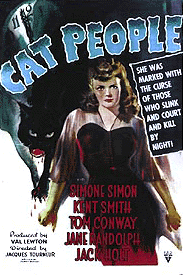 America however continued making horror films through World War 2. While the films made at this time didn't stray from the conventions or style of horror in the 1930s there was unusual focus on domestic animals, perhaps wanting to avoid the theme of human evil during such a dark time for the country with world war 2 and the great depression, some examples of these films are The Wolf Man (1941) and Cat people (1942).
 There were of course exceptions to this, Films which still contained violence and focused on the cruel side of humanity were still produced for example dr Jekyll And mr hyde.
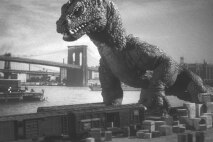 The 1950s horror films focused most on creatures and monsters, many ex soldiers were still traumatised from the war, suffering from Shell shock and many other horrible trauma conditions that came from the war. few people wanted to see human corruption or mental illness, so Hollywood focused on monsters, and with techniques and technology developing as it was, these films became immensely popular.
 These films focused around mutant animal-human combinations, dinosaurs Or giant wasps. People were amazed by the technical effects which were shocking and novel at the time. some examples of this are Godzilla (1954), The beast from 20,000 fathoms (1953) or The creature of the black lagoon (1954).
The 1960s is arguably one of the best eras for the horror genre, the decade redefined what people considered horrific and acceptable. It's the era of the sexual revolution, society coming to terms with premarital sex, cohabitation and homosexuality, this reflects in the films of the time, which now suggest sex and premarital relationships allowing psychological horror films to add a sexual element to the disturbing nature and content of the film. This promiscuity is demonstrate in Hitchcock's Psyco. The 1960 specialised in psychological thrillers, focusing on cold killers with disturbing motives.
One of the most famous and controversial horror films of the decade, it features graphic violence, sex and nudity, for the times this was consider outrageous and it was questioned if the film would even be released due to all the controversies but was eventually released. This film was extremely shocking because it broke the structure that audiences had come to expect of horrors films; the protagonist Marion Crane was killed in the first half of the film, this surprise has arguably made the scene the most famous in the history of horror.
Psyco was also quick shocking for the time because unlike other horror films where the antagonists was a monster or hideous old man, the antagonist was a handsome young man the audience believed to be a 'good guy'. His relationship with Marion Crane adds a further disturbing connotation because it gave the audience a feeling of violation and misplaced trust.

Other famous films of the era include The Birds (1963), Carnival of Souls (1962) and Night of the Living Dead (1968).
The 1970s had similar themes to the 1960s but became a lot darker, themes of spousal abuse, position and insanity hit the screen, giving films a darker element. Films like The Shining are more terrifying than usual psychological thriller/horror films because we are introduced to a protagonist for example Jack Torrance as a kind, good character who we learn to empathise with and care for, who then ultimately becomes the villain leaving the audience conflicted about what they want to happen.
Other films like Stepford Wives (1975) rely on disturbing concepts to make their films memorable and horrific.
Other famous films of the decade includes Carrie (1976), Stepford Wives (1975), Alice, Sweet Alice (1976) and The exorcist (1973).

The 1980s are famous for graphic violence and death in horror films and example of this would be Nightmare on Elm Street (1984). The villain is graphically hideous with decaying skin and razors embedded in his fingers which is disturbing in its self but it is the graphic violence of the deaths in the film that made it famous.

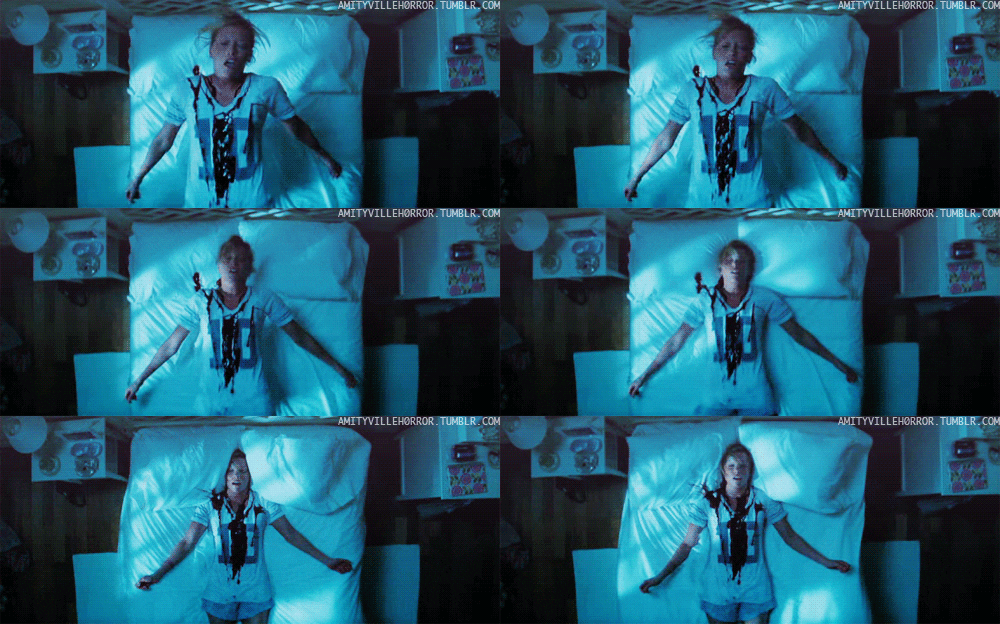
The 1990s also focused on psychopathic antagonists favoured from the 60s onwards. There is a great deal less censorship than in years before allowing villains to kill the antagonists the most gruesome of ways.
Silence of the Lambs (1991) shows a disturbing side of human nature, going into depth about cannibalism which is graphically shown in the film. It almost stylises cannibalism making the detail shown all the more disturbing for the audience.

One of the key horror films of the 90s is Scream (1996). The masked face terrifying it's audience and becoming an iconic symbol of horror. The film is filled with cliches but that is what made it so successful, audiences could guess the film structure and twists with key themes for example slashing, masks etc.

 In the last 15 years have seen an range of different sub-genres of horror, a majority of these have been thriller, or sudden action films designed to shock their arguments and build tension.
 Popular Horror Films in the 2000s.
- Final Destination
- 28 days later
- Halloween:Resurrection
- Paranormal Activity
- The Conjuring
- Saw
- Carrie (Remake)
- The Woman in Black
Subscribe to:
Comments (Atom)